The name is a lie, and that’s part of the charm.
The Japanese Slipper was invented in Melbourne, Australia in 1984 — not in Japan — by a French bartender working at Mietta’s, one of the city’s most celebrated restaurants at the time. The only Japanese thing about the drink is the Midori, and even that just means “green.” What you’re actually holding is a neon artifact of 1980s Australian bar culture, and a three-ingredient sour that somehow still works forty years later.
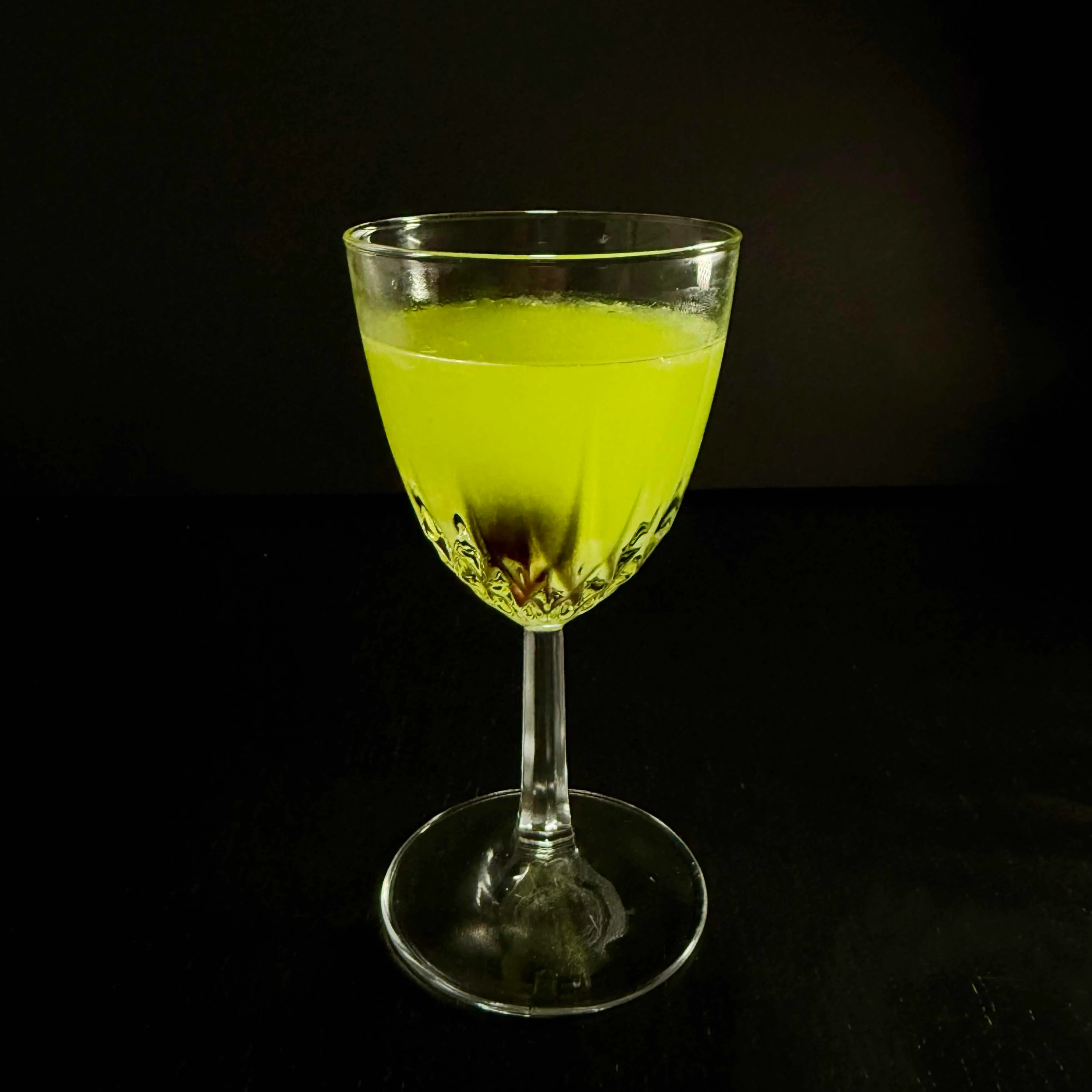
Equal parts Midori, Cointreau, and fresh lemon juice. That’s it. Shaken hard and double-strained into a chilled coupe, it comes out the color of a traffic light and drinks like a properly calibrated sour. The sweetness of the melon, the bite of the orange liqueur, and the acid from the lemon balance each other without any adjustment needed — which is the whole point of an equal-parts spec.
“The only Japanese thing about it is the Midori — and even that just means green.”
The technique here is about cold and clarity. Shake hard until the shaker is genuinely cold in your hands, then double-strain to catch any ice chips. A coupe is traditional and keeps the temperature working for you. One important note on substitutions: the melon liqueur is non-negotiable. It’s what makes a Japanese Slipper a Japanese Slipper. Midori is the original and most widely available, but any melon liqueur with similar sweetness will get you there — you don’t need the specific brand, just the flavor.
Why this works
The Japanese Slipper is a textbook equal-parts sour — the same structural logic as a Corpse Reviver #2 or a Margarita, where each component pulls equal weight. Midori brings sweetness and its distinctive melon flavor. Cointreau contributes orange brightness and a clean bite. Fresh lemon juice cuts through both and keeps it from tipping into candy. Nothing is fighting for dominance; it’s just very 1984.
Tips & variations
- Double-strain matters. The fine mesh strainer catches ice chips and citrus pulp — you want a clean, clear pour into that coupe, and the color sells it.
- Chill your glass. Three-ingredient sours warm up fast. A coupe straight from the freezer buys you a few extra minutes at the right temperature.
- Any melon liqueur works. Midori is the classic, but other melon liqueurs are a direct 1:1 substitute at the same measure. The color will shift slightly depending on brand.
Make it in Spritz
The Japanese Slipper is in the Spritz app — tap the link below to open it, scale the servings for a batch, or check instantly whether it’s makeable with what’s already in your bar. If you want to riff on the spec, use Fritz to generate a variation: give it the melon-citrus-orange profile and see what it builds.
Open this recipe in Spritz →