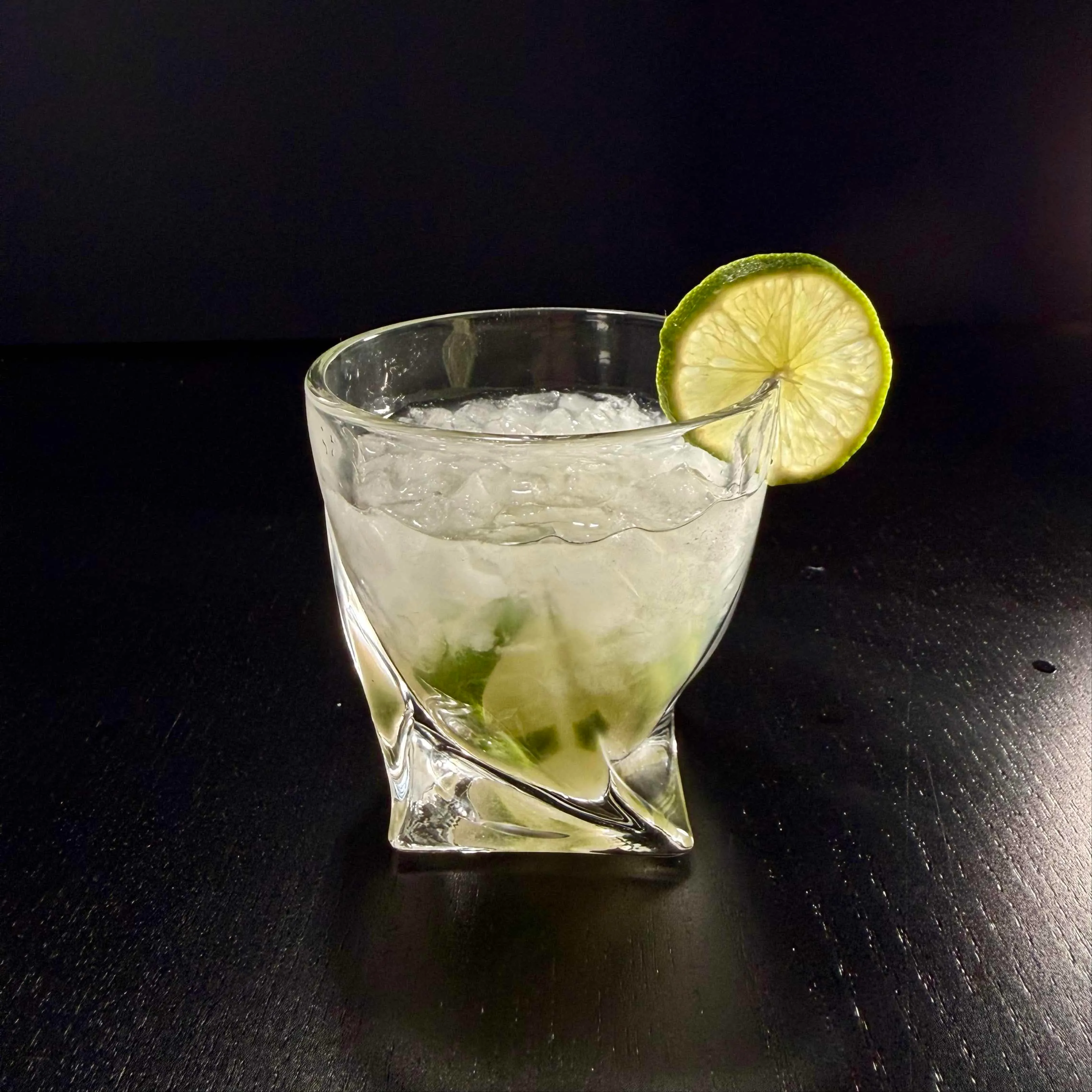
A Caipirinha looks almost too simple to be as good as it is: lime wedges pressed right into a rocks glass, sugar dissolving into the juice, crushed ice, and a pour of cachaça. That simplicity is the whole point. It is bright, cold, lightly rustic, and exactly the kind of drink that tastes like it should be made outside on a hot day.
This is Brazil’s national cocktail, and the ingredient that makes it a Caipirinha is cachaça. Cachaça is a sugarcane spirit from Brazil, and it gives the drink a grassy, funky, fresh edge that plain rum cannot quite copy. The recipe also has a little history baked in: the Caipirinha started life as a farm remedy around the Spanish flu era in 1918 before becoming the classic lime-and-cachaça drink people know today.
A great Caipirinha is basically fresh lime, sugar, cachaça, and ice doing exactly enough.
The key technique is muddling the lime and sugar directly in the glass. You are not trying to pulverize the lime into bitterness; you are pressing out the juice and oils while giving the sugar a chance to dissolve. Once the glass smells intensely limey and the sugar has mixed into the juice, pack it with crushed or cracked ice, add cachaça, and stir until cold.
For substitutions, the honest answer is that cachaça is required for a true Caipirinha. You could make a delicious lime-and-rum drink with another rum, but it stops being the same cocktail. If you absolutely need a fallback, rhum Agricole is the closest option because it has a grassy sugarcane character. Austin’s coworker Pedro also suggested a fun variation: swap the sugar for sweetened condensed milk for a richer, dessert-like twist.
Why this works
The Caipirinha works because every ingredient has a job. Lime brings acidity, aroma, and bitterness from the peel oils. Sugar softens that acidity and turns the muddled juice into a fast syrup. Cachaça adds the unmistakable sugarcane backbone that separates the drink from a daiquiri or mojito. Building it directly in the rocks glass keeps the texture casual and lets the crushed ice slowly dilute everything into something incredibly refreshing.
Tips & variations
- Cut the lime into wedges before muddling so the juice and oils release quickly without needing to overwork the peel.
- Use crushed or cracked ice if you can; the drink is best when it gets very cold and slightly diluted as you stir.
- Try Pedro’s condensed milk variation when you want a creamier, richer riff, but keep the classic sugar version for the cleanest refreshing Caipirinha.
Make it in Spritz
Spritz makes this kind of simple classic easier to keep in rotation. You can scale the serving, instantly see if it is makeable with what’s already in your bar, and use Fritz AI to build a variation when you want to riff on the classic without losing the structure.
Open this recipe in Spritz →